WHAT WE DO
Applied Research & Innovation
The Food Security Research Institute (FSRI), a Non-Profit Company (NPC), bridges the missing gap between fundamental research and the need to demonstrate technical and commercial viability of marine and freshwater aquaculture opportunities in the oceans economy space, or applied research. This is accomplished through innovative design, engineering and careful project concept design packaging followed by project prototyping, and either pilot scale or semi-commercial scale implementation, and finally the auditing of outcomes paving the way for private sector commercialization to follow. The mission and vision of the FSRI is to bring technological and engineering solutions to play through prototyping and pilot scaling to demonstrate commercial opportunities in the oceans economy. A definitive list of high impact outputs from the FSRI include sustainable intensification solutions for the commercial aquaculture sector, as well as the introduction of new opportunities for commercialization targeting food security and job creation. Then in essence, the function of the FSRI is to lay sound foundations upon which the commercial sector can be built applying the principles of sustainability, food security, food safety and inclusivity.

In addition, the other major objectives of the FSRI are to advance commercial aquaculture growth in South Africa through several initiatives
- Technology demonstration on a smaller commercial scale
- Practical hands-on teaching and technology dissemination
- The provision of early seeding and catalytic industry inputs
- Wild seed quarantining and disease purging to create Specific Pathogen Free (SPF) breeding colonies
- Genetic development of wild germplasm for the aquaculture industry.
The FSRI’s high-impact outcomes then aim to lure private sector investment into the oceans economy space breaking new ground by ushering in new sustainably cultivated marine product offerings such as seawater farmed tilapia to replace unaffordable Cape hake, and both Atlantic salmon and marine shrimp for import replacement in South African markets. Further projects include the domestication and culture of the Cape rock lobster, and several marine line-fish species, inland saline zero-discharge Integrated Multi Trophic Aquaculture (IMTA) andmore. Then, the FSRI is your oceans or blue economy food security partner.The first, and flagship project, at the FSRI, is Phase 1 of Marine Tilapia Aquaculture Project which aims to execute early seeding and catalytic work to spawn a new marine finfish aquaculture industry targeting the white fish market to replace increasingly unaffordable Cape Hake.
Marine tilapia potentially offers a more affordable and wholesome marine product targeting the least cost animal meat protein source in South Africa and the South African Development Community (SADC) in particular. The Cape hake fishery, based upon annualized quotas, is worth more than R5Bn annually. As such, the value proposition offered by a scalable marine tilapia aquaculture industry of comparable volumes would be worth over R4.5Bn annually potentially creating over 5,000 new jobs in impoverished communities along the west Cape coast, and also new fish related jobs for fishers not awarded a quota.
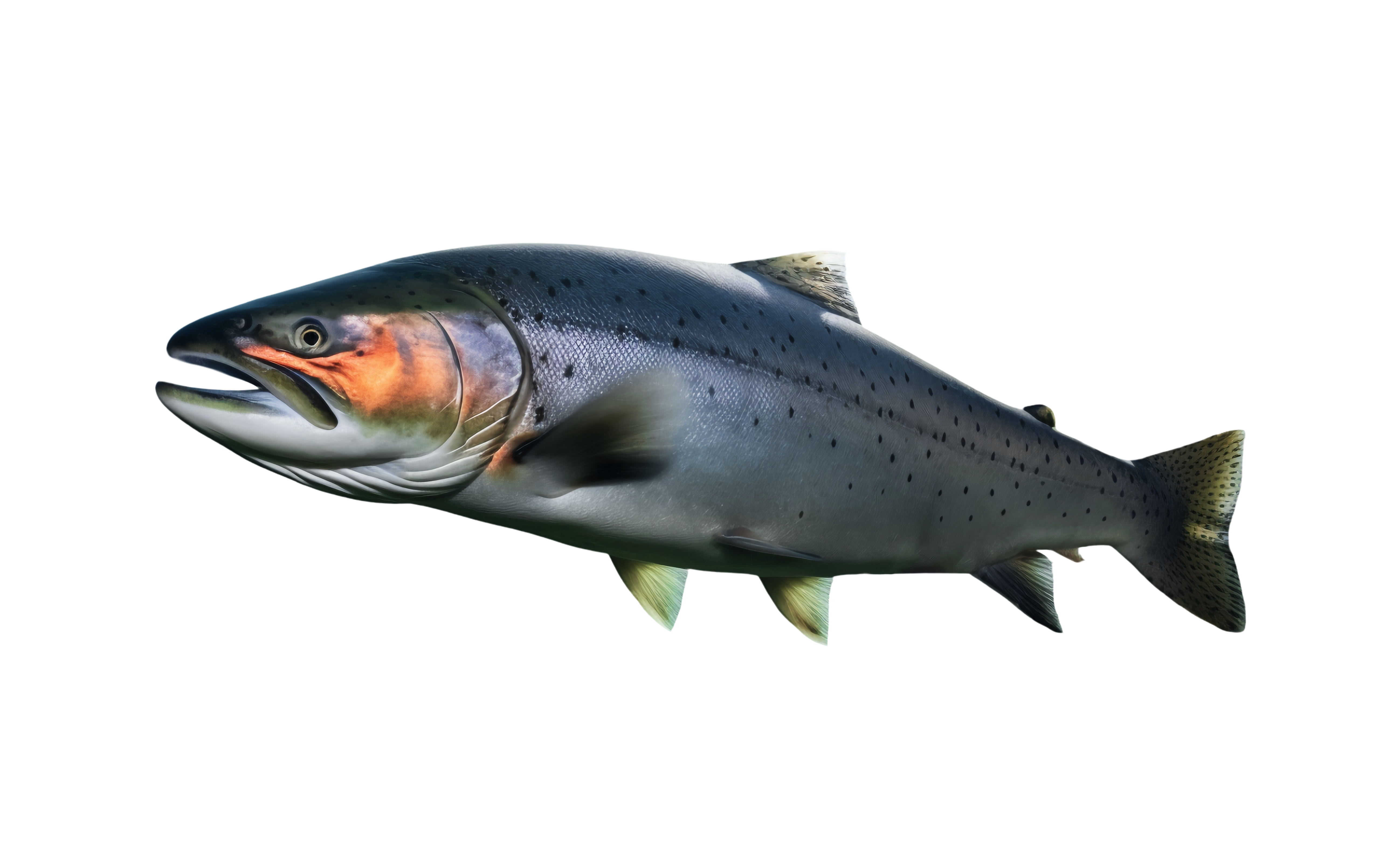
Commercialization & Private Sector Growth
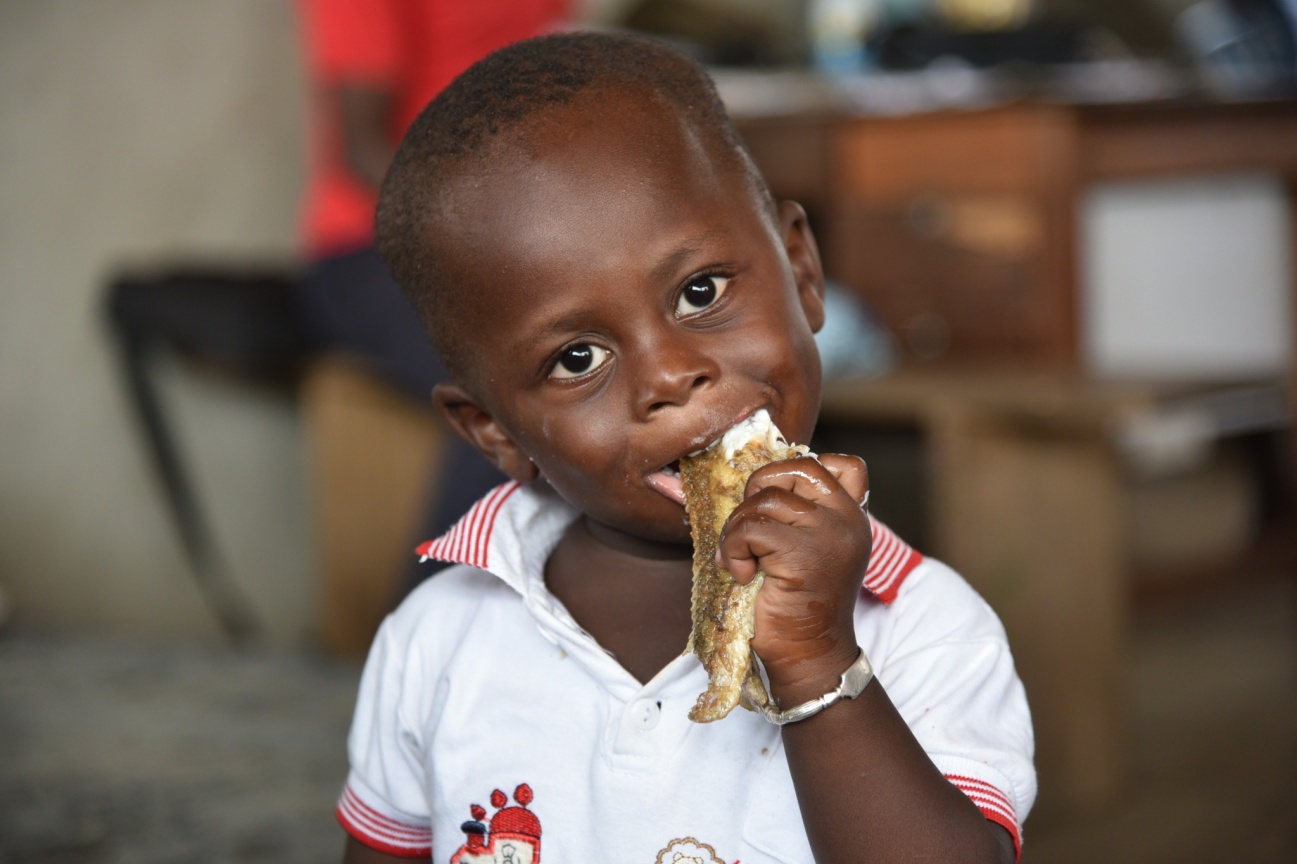
Feasting on affordable tilapia a high protein meal for young children in Africa requiring high-quality animal-meat proteins for the first 1000 days from birth.
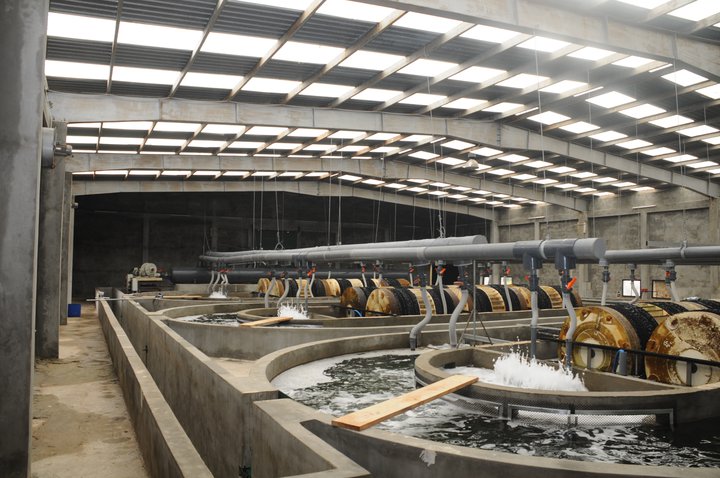
Marine SAFF-RAS farm in Tartous, Syria producing the Guilthead sea bream (Sparus aurata)
Several other projects willbe undertaken at the FSRI. The second of which is a pilot scale land-based Atlantic salmon farm using the SAFF Recirculation Aquaculture System (RAS) [see photo of a seawater SAFF-RAS farm producing sea bream in Syria above] under a zero emissions target (waste water in particular) to output 6kg live weight fish without the use ofchemicals, anti-biotics, and without the use of artificial pigmentation compounds (synthetic astaxanthin, standard practice by industry at present). Atlantic salmon farming initiatives at the FSRI will pave the way for private sector driven competitive and wholesome fish production for the sushi and fresh salmon market in South Africa where current imports are over 5,000 tonnes per annum worth R1Bn in air delivered fresh commodity chiefly from Norway under a high carbon footprint.
In Turkey, cooks blanch Salicornia and splash it with olive oil and garlic. Koreans dry and grind the plant and blend itwith sea salt. Italians tuck the shoots into bowls of pasta; the
French do the same when making
omelettes and terrines.
Salicornia spp. Culture system at UoS (courtesy: Henk Stander)
Sea lettuce, Ulva lactuca included in the IMTA system due to its ease of culture and use as a valuable source of nutrients and phytogens for inclusion in tilapia and salmon feeds
In Turkey, cooks blanch Salicornia and splash it with olive oil and garlic. Koreans dry and grind the plant and blend itwith sea salt. Italians tuck the shoots into bowls of pasta; the
French do the same when making
omelettes and terrines.
Salicornia spp. Culture system at UoS (courtesy: Henk Stander)
Sea lettuce, Ulva lactuca included in the IMTA system due to its ease of culture and use as a valuable source of nutrients and phytogens for inclusion in tilapia and salmon feeds
Commitment to Sustainability
Applying an Integrated Multi-Trophic Aquaculture (IMTA) approach enables the production of sea lettuce (Ulva spp) and Salicornia spp. as inorganic extractive components cultivated on nutrified saline waste streams from fed marine tilapia and Atlantic salmon. Similarities can be drawn to the partial circular economy approach to waste valorisation in applied de-coupled aquaponics, enabling zero waste water discharge and maximum nutrient recovery via the harvest of edible marine seaweed and sea vegetables for both fish and man. In addition, the Food Security Research Institute (FSRI) will undertake early work to bring a host of Red Data Book listed and commercially threatened marine seafood species closer to commercial production, and will go on to demonstrate successful commercial aquaculture methodologies and technologies for the cultivation of the below listed species.
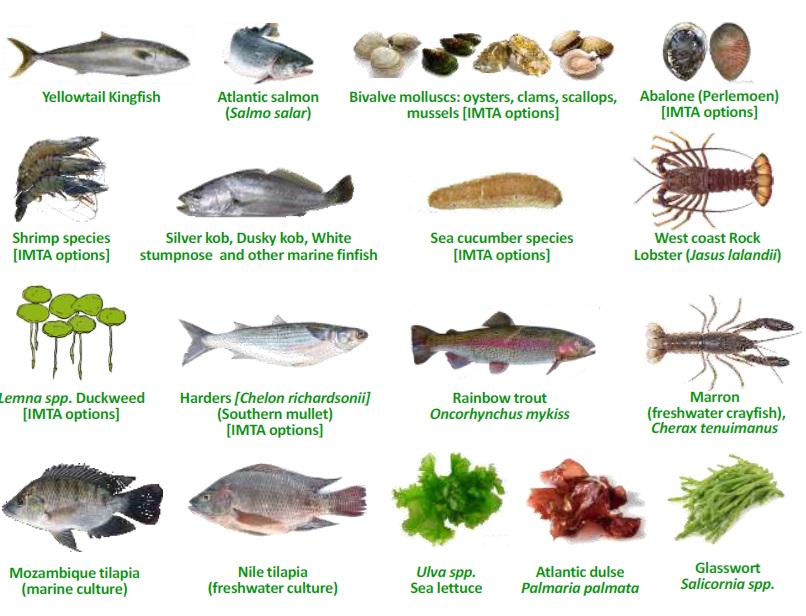
Affordable, wholesome and nutritious farmed seafood targeting food security and food sovereignty in South Africa is the prime objective of the FSRI.